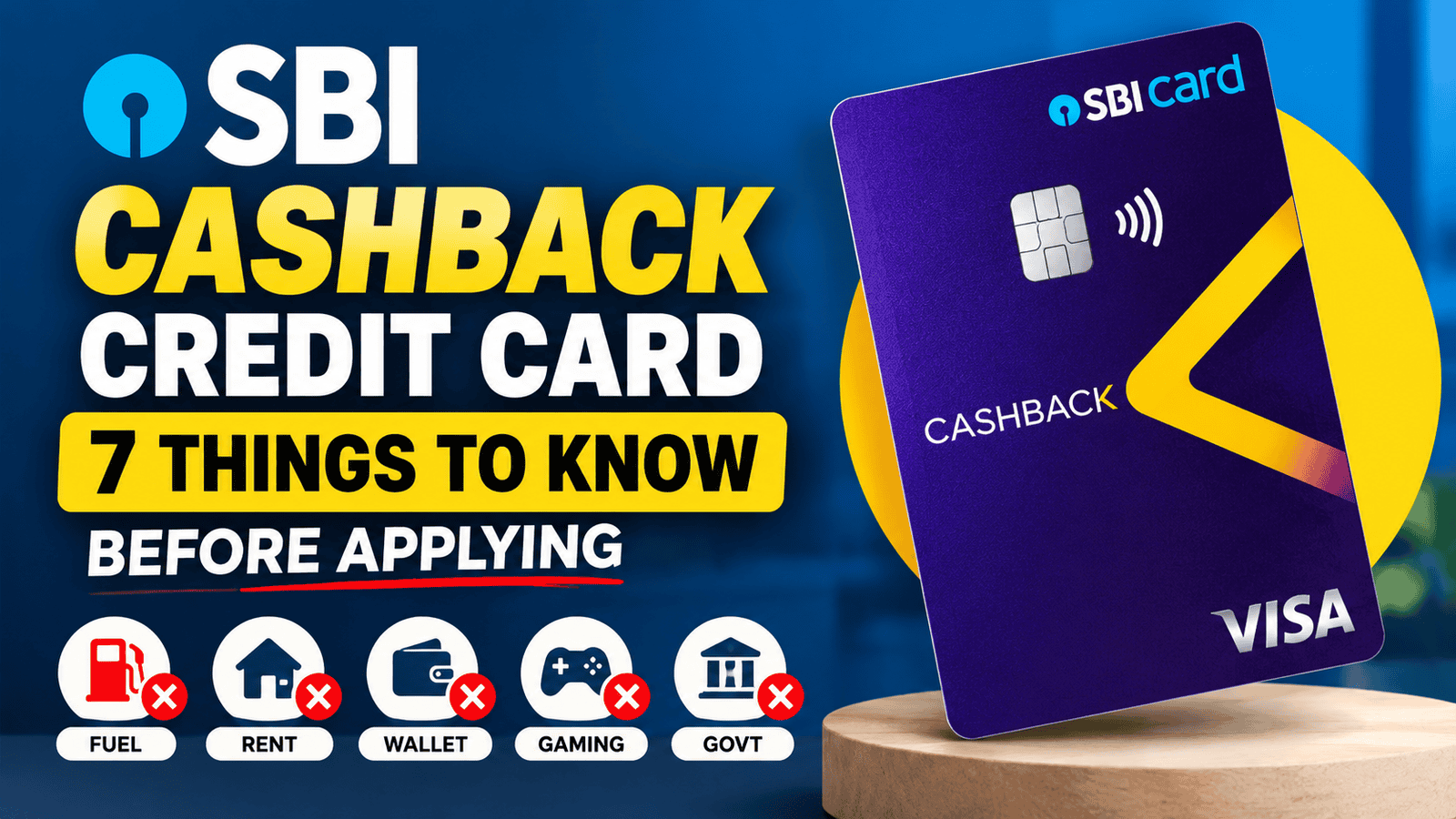
The SBI Cashback Credit Card offers 5% cashback on eligible online spending. But that doesn’t mean every online purchase earns 5% back.
Before applying, you should understand the cashback limits, excluded transactions, offline cashback rate, and annual fee. These details can make a big difference in how much you actually save with the card.
Here are seven things to check before making your decision.
SBI Cashback Credit Card: 7 Things to Know Before Applying
1. The 5% Cashback Doesn’t Apply to Every Online Purchase
The 5% cashback rate is one of the main reasons people consider this card. However, several transaction categories are excluded from cashback.
These include:
- Fuel
- Rent payments
- Wallet loads
- Utility bills
- Insurance
- Education
- Jewellery
- Railway transactions
- Digital gaming
- Toll payments
- Government-related transactions
Digital gaming, tolls, and government-related transactions were added to the exclusion list from April 1, 2026.
If you spend a large part of your monthly budget in these categories, you may earn much less cashback than expected.
Before applying, check how much of your regular spending actually qualifies for cashback.
2. Online Cashback Is Capped at ₹2,000
Even if all your online purchases qualify for cashback, there is a limit to how much you can earn.
The SBI Cashback Credit Card offers a maximum of ₹2,000 cashback on online transactions per statement cycle.
Here’s how the calculation works:
| Eligible Online Spending | Cashback at 5% |
| ₹10,000 | ₹500 |
| ₹20,000 | ₹1,000 |
| ₹40,000 | ₹2,000 |
| ₹50,000 | ₹2,000 |
| ₹1,00,000 | ₹2,000 |
Once your eligible online spending reaches ₹40,000 in a statement cycle, you have earned the maximum ₹2,000 cashback.
Spending more online won’t earn you additional cashback in that category during the same cycle.
This is worth keeping in mind if you regularly spend ₹50,000, ₹1 lakh, or more online every month.
3. Offline Spending Earns Only 1% Cashback
The card offers 5% cashback on eligible online spending, but the rate drops to 1% on offline POS transactions.
This difference matters if you usually pay by card at physical stores rather than shopping online.
For example, if most of your spending happens offline, you won’t get the same cashback rate that makes this card attractive for online purchases.
Before applying, look at how much you spend online and offline each month. Your total spending alone won’t tell you how much cashback you can earn.
4. The Annual Fee Is ₹999
The SBI Cashback Credit Card has an annual fee of ₹999. The renewal fee is also ₹999.
However, the renewal fee can be waived if you spend ₹2 lakh during the previous year.
That sounds useful, but there’s one thing to consider: spending ₹2 lakh doesn’t automatically make the card worthwhile.
If much of that spending falls into categories that don’t earn cashback, your returns may be lower than expected.
Also, don’t increase your spending just to qualify for a fee waiver. The goal is to save money, not spend more than you normally would.
5. Cashback Is Credited Directly to Your Card Account
One useful feature of the SBI Cashback Credit Card is its simple cashback process.
You don’t have to collect reward points and redeem them separately. The cashback is credited to your SBI Card account and adjusted in your statement.
There’s no extra process of converting reward points into vouchers or other redemption options.
If you prefer straightforward cashback over a reward points system, this feature makes the card easier to use.
6. Fuel Doesn’t Earn Cashback, but You Can Get a Surcharge Waiver
Fuel transactions don’t qualify for cashback on this card. So, don’t expect to earn 5% back when paying for fuel.
However, eligible fuel transactions between ₹500 and ₹3,000 can qualify for a 1% fuel surcharge waiver.
The maximum waiver is ₹100 per statement cycle.
You can still use the card for eligible fuel transactions, but the benefit comes from the surcharge waiver rather than cashback.
7. High Online Spending Can Reduce the Card’s Value
The 5% cashback rate looks attractive, especially if you spend a lot online. But the ₹2,000 cap limits your returns.
Suppose you spend ₹1 lakh online in one statement cycle, and all of it qualifies for cashback.
At 5%, your cashback would be ₹5,000. However, the online cashback cap limits your actual earnings to ₹2,000.
That’s a significant difference between the cashback rate advertised and the amount you receive.
If you regularly spend large amounts online, pay attention to the cashback cap rather than focusing only on the 5% rate.
Should You Apply for the SBI Cashback Credit Card?
The SBI Cashback Credit Card can be a strong option if most of your spending falls into eligible online categories and your cashback earnings stay within the ₹2,000 limit.
Its direct cashback credit also makes it convenient for people who don’t want to manage reward points.
However, the card may not offer the same value if most of your spending falls into excluded categories, you mainly shop offline, or you regularly exceed the online cashback cap.
Before applying, consider these four things:
- How much of your monthly spending qualifies for cashback?
- Will you reach the ₹2,000 online cashback limit?
- Can you recover the ₹999 annual fee through your eligible spending?
- Are you considering the card for your normal expenses rather than spending extra to earn rewards?
The bottom line: Don’t choose the SBI Cashback Credit Card just because it offers 5% cashback. Check your spending habits, understand the limits, and work out how much you can actually save. That will tell you whether the card is a good fit for you.

I write about credit cards, personal finance, banking products, and money-saving tips for CardZen. My aim is to make financial topics easier to understand and help readers make informed decisions.