SBI Cashback Credit Card Review 2026
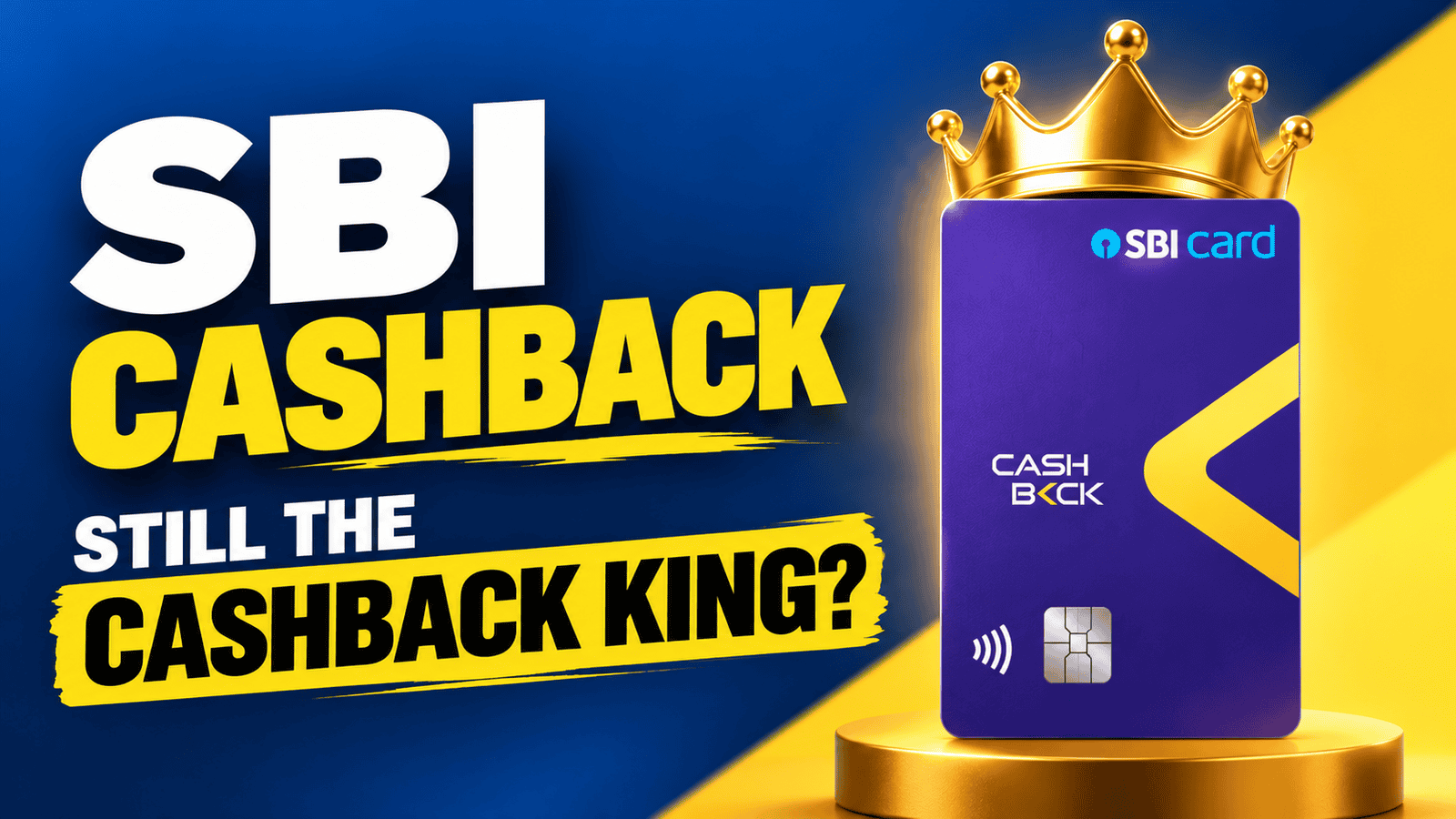
The SBI Cashback Credit Card has built its reputation around one straightforward benefit: earning cashback on everyday spending without dealing with complicated reward points. But the card’s value proposition has changed, and its revised cashback limits make it important to look beyond the headline 5% rate.
For some users, it can still be an excellent cashback card. For others, the exclusions and monthly earning limits may reduce its appeal.
So, is the SBI Cashback Credit Card still worth considering in 2026? The answer depends largely on where you spend your money.
SBI Cashback Credit Card: Cashback Rates at a Glance
The card follows a simple cashback structure:
| Transaction Type | Cashback Rate |
| Eligible online spending | 5% |
| Offline POS transactions | 1% |
The difference between these rates can significantly affect your overall returns.
For example, ₹10,000 in eligible online spending earns ₹500 cashback. Increase that spending to ₹20,000, and the cashback rises to ₹1,000. At ₹40,000, you would earn ₹2,000.
The calculation looks attractive, particularly for people who make a substantial portion of their purchases online. However, the cashback limits introduce an important restriction.
The ₹4,000 Cashback Limit: What Changed in 2026?
Effective April 1, 2026, the cashback limits were revised. The card now has separate maximum cashback limits for online and offline transactions within a statement cycle.
| Spending Category | Maximum Cashback | Spending Required |
| Eligible online spending | ₹2,000 | ₹40,000 |
| Eligible offline spending | ₹2,000 | ₹2,00,000 |
| Combined maximum | ₹4,000 | Depends on spending mix |
Consider a month in which you spend ₹50,000 online. At 5%, the cashback would ordinarily amount to ₹2,500. However, the online cashback cap restricts your earnings to ₹2,000.
Once eligible online spending reaches ₹40,000 in a statement cycle, you have already exhausted the online cashback allowance. Additional online spending will not generate further cashback during that cycle.
Offline spending follows a different calculation. Since the cashback rate is 1%, you need ₹2 lakh in eligible offline transactions to earn the maximum ₹2,000 cashback.
This means the card can deliver up to ₹4,000 cashback per statement cycle across both categories, provided your spending qualifies.
The important distinction is that a higher spending amount does not automatically translate into higher cashback.
Spending That Does Not Earn Cashback
The 5% rate is attractive, but it does not apply to every transaction. Understanding the exclusions is essential before estimating how much you can actually earn.
According to the terms covered in our research, cashback is unavailable on the following categories:
- Fuel
- Rent payments
- Wallet loads
- Utility payments
- Insurance
- Education
- Jewellery
- Railway transactions
- Digital gaming
- Toll payments
- Government-related transactions
- Merchant EMI and Flexipay EMI transactions
Digital gaming, tolls and government-related transactions were added to the exclusions effective April 1, 2026.
Why Your Total Spending Can Be Misleading
Suppose your monthly card spending reaches ₹50,000. At first glance, a 5% cashback rate might suggest earnings of ₹2,500.
But imagine that this amount includes ₹20,000 in rent, ₹10,000 in utility bills and ₹5,000 in insurance payments. These transactions do not qualify for cashback under the exclusions listed above.
Consequently, calculating your potential returns using total card spending would give you an inaccurate picture.
The more useful question is not how much you spend each month, but how much of that spending is eligible for cashback.
Features Beyond Cashback
Although cashback is the card’s main attraction, it also offers several practical features.
- Automatic cashback credit: Cashback is credited directly to your SBI Card account and adjusted in the statement, eliminating the need to redeem reward points manually.
- Contactless payments: You can tap the card at compatible POS terminals. Transactions of up to ₹5,000 normally do not require a PIN.
- Fuel surcharge waiver: Fuel transactions do not earn cashback, but eligible transactions between ₹500 and ₹3,000 can qualify for a 1% fuel surcharge waiver, capped at ₹100 per statement cycle.
- Add-on cards: You can request additional cards for family members.
- Flexipay: Eligible purchases can be converted into EMIs, with a minimum Flexipay booking amount of ₹2,500. However, Flexipay EMI transactions do not earn cashback.
- International transactions: The card supports international usage, but foreign currency transactions attract a 3.5% forex markup. This limits its appeal for international spending.
These features add convenience, but cashback remains the primary reason to consider this card.
Annual Fee: Is the SBI Cashback Card Worth ₹999?
The SBI Cashback Credit Card carries an annual fee of ₹999, with a renewal fee of ₹999. However, the renewal fee can be waived if you spend ₹2 lakh during the preceding year.
Whether the fee is worthwhile depends on how much eligible cashback you earn.
Consider the basic calculation: at a 5% cashback rate, earning ₹999 requires approximately ₹19,980 in eligible online spending.
In practical terms, around ₹20,000 in eligible online purchases can generate enough cashback to offset the ₹999 annual fee.
However, this calculation assumes that the spending qualifies for cashback and that the applicable cashback limit has not already been reached.
If a significant portion of your spending falls into excluded categories, you may need considerably more total spending to recover the fee.
The right way to evaluate the card is to look at the cashback you retain after accounting for the annual fee, rather than focusing on the cashback rate alone.
Who Should Consider the SBI Cashback Credit Card?
The card is particularly suitable for people whose spending habits align with its cashback structure.
You may benefit from it if:
- Most of your card spending happens online.
- You regularly purchase items in cashback-eligible categories.
- You prefer direct cashback over managing reward points.
- Your eligible spending is sufficient to offset the annual fee.
- You do not consistently exceed the online cashback cap.
The renewal fee waiver can also improve its value if your annual spending reaches ₹2 lakh and you meet the applicable conditions.
For these users, the combination of 5% online cashback and automatic statement credit remains attractive.
Who Should Avoid It?
The card may be less appealing if your spending habits do not match its strengths.
People with substantial excluded spending: If rent, fuel, utilities, insurance, education or other excluded categories account for most of your expenditure, your actual cashback may be much lower than expected.
People who primarily spend offline: The 1% offline cashback rate is considerably lower than the 5% rate available on eligible online transactions.
High online spenders who regularly hit the cap: Once you reach ₹2,000 in online cashback during a statement cycle, additional eligible online spending earns no further cashback in that category for the same cycle.
For these users, the headline 5% rate may overstate the card’s practical value.
Final Verdict: Is It Still the Cashback King in 2026?
The SBI Cashback Credit Card remains a strong option for people who make frequent, eligible online purchases and want a straightforward cashback system.
Its 5% online cashback rate is still attractive, and automatic cashback credit keeps the experience simple. However, the ₹2,000 online cashback cap and the expanded list of excluded transactions make it less compelling for certain spending patterns.
Our rating: 8.5/10.
The card earns this rating because it can deliver meaningful returns without requiring users to navigate a complicated reward-points system. Its limitations, however, matter just as much as its headline benefit.
If your online spending is substantial but remains within the cashback cap, the SBI Cashback Credit Card can still be an excellent choice.
If most of your spending is excluded or you consistently hit the cashback limit, its value becomes more restricted.
So, is it still the Cashback King? Yes, but not for everyone.

I write about credit cards, personal finance, banking products, and money-saving tips for CardZen. My aim is to make financial topics easier to understand and help readers make informed decisions.